18th March 2026
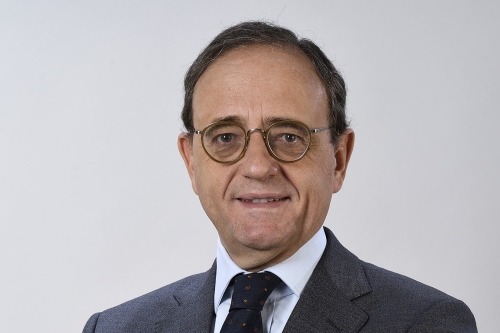
Andrea Enria and Pedro Duarte Neves in conversation with Stefan Ingves
Pedro Duarte Neves: Thank you very much, Stefan, for accepting our invitation and participating in this interview. We couldn't think of a better person to discuss how financial regulation and supervision are equipped to address the current threats, or potential threats, for financial stability.
Let us start by the impact of geopolitics on financial regulation and supervision. As it is widely accepted, the mechanisms for international standard setting for the financial sector have been very effective since the Global Financial Crisis, most notably so the Basel Committee on Banking Supervision that you chaired for many years. Do you think that these mechanisms for international standard setting will be weakened by the current developments in the United States?
Stefan Ingves: First of all, I want to say that it is a wonderful opportunity to participate in this type of exercise and very nice to do it with two old friends.
To your question, I think it is important to stress that financial instability is maybe not a central focus presently, because the geopolitics of what is going on today is such that people are focusing on many, many other things. But that doesn't mean that you can ignore financial stability and what is going on in the financial sector in many parts of the world, particularly based on what we learned during the Global Financial Crisis and a number of episodes or incidents after that.
I think it is fair to say that, and this actually dates back to the start of the Basel Committee 50 years ago, that we do have and we will continue to have what is called internationally active banks. Irrespective of political ups and downs, there still will be an interest in maintaining a level playing field in one form or the other. At least so far, no one has argued that we should limit international capital flows or make them harder than over the past 50 years or so. This means that it is still in the interest of everybody to stick to the current arrangements. If you are in charge of drafting rules, you realize very quickly how complex the task is. Only in a few very large economies, regulators can perform this task on their own. And even in large countries you very quickly realize that it actually helps to cooperate and discuss with others. Even more so in the future, because money moves around the globe and at a fast pace. Like it or not, we are in this together.
Having said that, and you see this throughout the history of the Basel Committee, there are various national interests, which always drive authorities to argue that there are special reasons to avoid change. This old-fashioned kind of tension is certainly not going to go away. Given the present circumstances, the best thing we can do is to stick to what we have and hope that the banking community at the global level more or less accepts where we ended up, despite, let me call it, random noise in the system from time to time.
Andrea Enria: Let’s now move to a more backward-looking perspective. It would be very interesting to have your take on what were, in your view, the main achievements of the financial reforms that have been adopted after the great financial crisis, and maybe also to get your views on whether there are elements that maybe have not been covered appropriately or that maybe, you know, should have been done differently with hindsight.
Stefan Ingves: Let me first start by saying that it is an achievement in itself that we got it done. But on the other hand, I don't think it is an impressive record for international cooperation that we got done, but it takes almost forever to implement. Because it is taking almost 20 years to implement it. We could have done better.
As to the key elements of the reform, it was absolutely obvious that capital requirements needed to go up, in one form or the other. But banks are complex institutions, particularly large international banks. When it comes to dealing with the plumbing of this adjustment, there were many different pieces to take care of. And this led to a very complex negotiation, which took many years. This also means that you just cannot think about the reform ex ante in terms of a general equilibrium framework. You have just to do one piece at a time and then hope that the whole thing adds up reasonably well. And I think that that actually happened.
First of all, it was a good thing that we eventually agreed on a new standardized approach, because that work was long overdue. We also managed to introduce a bit more risk sensitivity in the new standardized approach, which was a good thing. The other important achievement, which required difficult discussions, was the output floor. Basel II basically enables banks to grade their own exams, as internal models allowed them to push down and down capital requirements. This created the need for a connection between the standardized approach and the internal models approach. After many years of conversations, we ended up with a risk weight floor of 72.5% (i.e. risk weighted assets calculated with internal models cannot go below 72.5% of risk weighted assets calculated with the standardized approach). There's nothing academically beautiful about that number. It was just the number that most people could accept. But I do think that that was a good achievement.
I do feel that it was quite an achievement for us to agree on the liquidity coverage ratio (LCR) and the net stable funding ratio (NSFR). Banks are fragile by design: they don't have a lot of capital compared to other industries and they have various maturity mismatches, both when it comes to short run and the medium to long run. We can argue about the technical details, and probably it would make sense in the next 10 years to look again into the design of these two measures. But just to get to an agreement was an achievement in itself; and I do think that history has proven us right: liquidity buffers and maturity mismatches remain high on the agenda. We have had a few mishaps since the approval of these measures, but it has been a good thing that we have them in place.
I also think it was quite an achievement to make sure that the leverage ratio is there as a backstop. Let me explain my thinking: risk weights are probabilistic models, they are like weather forecasts, but we do know that weather forecasts are not always right. The leverage ratio is basically the size of your rubber boots and the umbrella, as when you run into trouble, people don't care about the risk weights anymore (when you run into trouble, almost by definition, the risk weights were wrong); in those circumstances people look at the leverage ratio, because it defines the level of losses you can actually sustain before the bank has to be wound up. Hence, I think it was a good outcome that the leverage ratio was included in the package, despite very heavy criticism by many, particularly, of course, the bankers themselves. Some of them came to me arguing that this would have pushed them to undertake very strange transactions. And one reply to that, for the sake of the argument, is: does this mean that if the leverage ratio is 100% and you just use your own money, you are really going to do strange things? So it's a complicated matter, but it is good that the leverage stayed in the reform package.
Finally, I think it was real progress that we managed to put together the Regulatory Compliance Assessment Programme (RCAP). At the global level, all participants in the committee accepted that a group of outside experts could come and take a look and assess to what extent actually you were in compliance with what had been agreed or not. This was a major achievement as previously the Basel Committee didn't really check whether countries were in compliance or not. Now the RCAP process is a valuable tool when it comes to keeping track of what countries are doing and not doing. I also do think that it creates elements of peer pressure. Because if at the table, say you agree to certain standards and then, all of a sudden, you just don't implement them, then there is a report that shows that. Meeting after meeting, it is like the drop that hollows the stone, because you have to go through that conversation.
You also asked about what is missing. I found it hard to understand why it was the case, but there was always pushback when we raised the issue of interest rate risk. And that has come back to haunt us, and we live with this loophole. Then the whole issue of sovereign risk was, of course, a complete total minefield, as sovereigns have a preference for granting themselves favors. Those are certainly two elements on which more could be done.
Let me also add one consideration. The work of the Basel Committee started in the 1970s and was really dominated by central bankers, who are lenders of last resort. With hindsight, it would have been much more natural to actually start with liquidity risk than with credit risk, in terms of what really, really matters for central banks. But that wasn't the case. The liquidity coverage ratio appeared very late in the process. So far, at least, no one has complained about it, and it seems to be there to stay. I do think that that is important.
Andrea Enria: As you say, the leverage ratio has been constructed as a backstop.
But then the fact that the leverage ratio starts being the binding requirement for the largest banks has led to a review in the US and now also in the UK. In both jurisdictions the leverage ratio was calibrated somewhat higher than the level prescribed by international standards. Still, I am concerned that we are witnessing a continuous decrease in the risk-weighted assets density (the ratio of risk-weighted assets to total assets) and as the leverage ratio starts biting we consider reducing the requirements. Do you have any views on this?
Stefan Ingves: It is a good question. If you don't want the leverage ratio to be binding, you increase the risk weights, or the output floor, and the problem disappears. Let me put it in a very blunt way: if bankers can get capital down, they argue that way. That's just the nature of the business.
The time frame is relevant because you put in place all these requirements because you want to avoid the disaster. But if disaster strikes after the next election there is no gain in sticking to the rules in the short run. Lowering capital charges in the short appears to be something you can do for free, arguing that the banks can lend more, which is a common argument frequently used for SME lending, for instance. There is a common short run interest of some of the banks and the politicians to reduce capital requirements with a view to increase the supply of credit. And usually that decision comes back to bite 5, 10 or more years later.
We just have difficulty in our societies to figure out how to balance the short run vis-à-vis the long run when it comes to financial stability. This remains a perennial dilemma. It is similar, actually, to monetary policy or the way we discuss climate change. Also, on climate change the conversation starts acknowledging that this is going to be bad in the future, so we need to do something about it, but not now. It happens frequently in human behaviour when it comes to trade-offs between the short run and the long run.
Pedro Duarte Neves: Let's now have your advice to supervisors, what should be their priorities in such uncertain times. How do you assess the risks for the preservation of financial stability, under the current policy mix, and I am referring to monetary policy, fiscal policy and macroprudential policy. The current situation is characterized by all-time highs in public debt in most geographies, high levels of private corporate debt, and a increasing role of the non-banking sector. Moreover, we are not, any longer, under a low for long interest rate period. So, what are in your view the risks in which supervisors should focus more at this juncture, what is your advice for them?
Stefan Ingves: A first, very general reflection that always holds is that supervisors should go and chase the leverage and try to figure out where you find it. Sometimes it is hidden, so it is a difficult exercise to actually find it. What is particularly challenging is that, over the coming years, we will probably see high and increasing debt, and particularly the public debt, in many parts of the world. Starting from an already high level, this increases the likelihood of bad things happening in one form or the other. The problem is that you never know when it will happen. You can have a very high level of debt, both in the private sector and in the public sector, and mysteriously, the whole thing holds together for decades until, all of a sudden, one day it doesn't. If you are on the supervisory side, you really need to think hard about a plan B, if I can call it this way, so that you are prepared when things start going south. You have various markets today that need some extra attention. Private credit, for instance, has been growing very fast, moving lending businesses out of the banks. And I find it unlikely that those lenders would have an informational advantage over the banks when it comes to judging risk, as banks have specialized in assessing credit risk and have been in this business for 100 years or 200 years. I find it difficult to believe that non-bank lenders, all of a sudden, think that they know better. This will certainly be a vulnerability.
If you look at financial crises over the centuries, even if a phenomenon is supposedly happening outside the banks, if it requires enough leverage to be engineered, eventually there needs to be money borrowed from the banks. This means that when things go south, everything still ends up on the balance sheet of the banks, despite all the previously accepted arguments that this development has nothing to do with the banks. That's because banks are so central in our types of economies.
So, one really needs to understand and keep track of what happens to the banks in a bad scenario. Unfortunately, if history gives us any guidance, a number of times in the past we have found that what we thought it was outside the banks, actually wasn't. This really goes back to my crisis management days, when you talked to some of the bankers and it took some time for them to understand this concern. They actually had lent in such a way that they thought that everything was dispersed across different borrowers, but when you added things up, it wasn't. So, two exposures across different loan portfolios actually proved to be just one. This is, of course, a dilemma.
Andrea Enria: We had an interview with Charles Goodhart opening our forum last year, and one of the points he made that we found interesting is that supervisors have focused a lot on credit risk, but they haven't covered enough interest rate risk. He argued that interest rate shocks are becoming more likely, especially in light of the increasing trend on governments’ debt, and eventually banks may well be brought down because of interest rate risk. His advice was that supervisors should focus more on this. Would you agree with that? And what would you suggest supervisors to better deal with interest rate risk?
Stefan Ingves: This is a tricky question because part of it is really about accounting rules and transparency. If you hold government paper with 10 years to maturity, then you can argue that there is no risk. But if the depositors want their money now, then obviously there is risk because you have to sell those bonds in the market and the price might turn out to be lower than what you have booked it at. And that is a dilemma. Many people don't like what I have said many times in the past, but my preference is to always mark everything to market, because that is the toughest way to force you to understand what is going on. If you mark everything to market and it is transparent, when you are underwater, then it is your responsibility when you run the bank to explain to your depositors why they still will get their money back. And if they don't believe what you are saying, then you have a problem. It is the classical maturity mismatch that comes back to bite you, in one form or the other. Most of the times the only way to bridge that gap is basically for the central bank to step in. This has happened in the past, both for banks and money market funds. Here is another dilemma for the central bank, because it will have to decide whether it is always going to backstop every ailing entity, and what kind of risks it is the responsibility of the banks to bear themselves.
I do know that others have had a completely different view and have been happy with booking everything at cost. And then everything looks good, until all of a sudden it doesn't. I know it's tough, but then even if the accounting rules don't require to mark everything to market, I do think it is helpful if you inform market participants about what it would look like if you mark everything to market. Professional investors will do this anyway, because they are paid to get their money back. I don't think you can fool market participants, but sometimes you have a preference for fooling yourself, and that's a dilemma.
Also, following Charles Goodhart's reflections, these issues need to be included in financial stability reports. If you are on the public sector side, you are paid to worry about this constantly. That's your job.
Pedro Duarte Neves: Stefan, you have already discussed risk-based measures of capital and the leverage ratio. Maybe now it's time to have your views on stressed capital, that is on stress testing, which is a specific topic for the Forum this year. Stress testing gained compelling relevance since the global financial crisis, but currently seems to be delivering somewhat declining benefits, as suggested by repetition, by adaptation of participants and so. From your point of view, what should be the priorities for stress testing going forward? How to make stress testing a more effective supervisory exercise?
Stefan Ingves: The first piece of advice is to always do stress testing, to never give up!
Because if you neglect doing stress tests, no stress testing at all, then when a bank runs into trouble you will be clueless about what is actually going on. Stress testing forces you to think through what might happen at bad times; and it is always better, regardless of whether you are in the private or in the public sector, to have gone through that exercise ex ante compared to having to deal with it when the house is burning. In past instances one of the key issues was always that neither the supervisors nor the banks themselves understood what was going on. This is why it really pays to do stress tests, despite the complaints, because it actually forces us to think through what might happen. Now, of course, in the real world, when you deal with actual stress episodes, things will never be identical to the stress test scenarios. But at least these exercises force you to think through what if questions.
If you don’t perform stress tests, then you will have to decide how to deal with the consequences. Just for the sake of the argument, let's assume your bank runs into trouble, then there will be a large number of auditors crawling all over the bank ex post; they will look at all the documents, check what has been done, and then they will ask the question: when you went into this episode, how did you think about it, and what did you know? And then if the answer is that you knew nothing because you didn’t even consider that the world would change, then you would be in a pretty bad situation. This is essentially what stress testing is all about. Not doing stress testing would be akin to saying that you don't want to know.
Pedro Duarte Neves: You are right, we know that well, as all of us have experienced very similar circumstances. Thank you.
Andrea Enria: Besides chairing the Basel Committee, you have also been the Vice Chair of the European Systemic Risk Board (ESRB), directly involved into macro-prudential work. What is your assessment of the contribution that macro-prudential policies implemented after the great financial crisis have brought about in terms of our ability to prevent and deal with financial crises? And do you think that there are potential systemic risks that are now building up, maybe outside the banking sector? We are focusing this year in the forum on non-bank financial institutions and real estate markets that could, once again, rock the boat and are wondering whether macroprudential policy has really already helped to contain those risks.
Stefan Ingves: I think it was a good thing that the whole idea of macro-prudential policy was put on the table, so we moved from having only conversations about individual banks to now having also a conversation about the system as a whole. Particularly in the European context, this forced everybody who is dealing with financial stability issues - regardless of whether they come from a focus on the banking sector, insurance or securities markets - to sit at the same table and discuss and argue about these challenges. In the European context, I think it was absolutely necessary to have all the member countries to sit there and listen to what the others say, because if you look systemic risk from a national perspective it is very common to argue that you don't have a problem, your country is different (while with a high likelihood, you are probably creating your own problems). it is very helpful to have these exchanges of views, as one of the difficulties - similarly to the Basel Committee - has been the fact that many people are well trained on issues concerning banks and credit risk, and not so accustomed to focusing on the non-bank financial sector, insurance, securities markets, and a whole host of other things. So, it has been a step in the right direction.
At the same time, macro-prudential policy is difficult, because many of the measures are highly political. And then the issues are the same we were discussing on the leverage ratio, because macro-prudential or supervision, in general, is about saying no. When you say no, it becomes a politically challenged process. This makes it easier to talk about macro-prudential policies, than to actually implement them. This is a dilemma that remains with us. But I do think it has been incredibly helpful to force everybody to sit in the same room and to have bank supervisors to listen to insurance supervisors and vice versa. And it has also been helpful to carry out a conversation about things that might not be bank specific only, where it probably makes sense to have some general rules in place. I mean, take the whole debate about borrower-based measures (loan to value or loan to income limits, for instance). Most of these measures are not bank specific and it is not an easy conversation to carry out. But it is better to leave the numbers do the talking compared to not having the numbers. What always disappointed me was the strong resistance to put together, and understand, national descriptions about what is going on.
You have this constant pendulum movement between the complete aggregate picture, and then down to the micro level at the national level. You need to focus a bit on both, but once you started moving into trying to understand what individual countries are doing, there was always a strong pushback. I don't think that is a good thing and the more the banking union matures - if we eventually end up with what I still prefer to call the capital markets union, and everything is moving in that direction - then we really, really need to understand the European level, while at the same time also having a reasonably good understanding of what happens at the national level.
Pedro Duarte Neves: Insisting again on the macro-prudential framework, could you choose one or more examples on what is missing in the macro-prudential framework, what would be your priorities going forward? Regulation of non-banking and, particularly, investment funds? A stronger stance on a positive neutral rate for the countercyclical capital buffer? Or to make some arrangements that make buffers more releasable under stress? None of us is any longer at the ESRB or at the Basel Committee, but what would your advice be in terms of priorities for those bodies?
Stefan Ingves: I agree with you on the need to continue keeping an eye on, and trying to gather data and better understand, what goes under the heading of non-bank financial institutions. This heading can cover many different types of phenomena. Now, maybe because households are borrowing a lot to buy residential properties in different parts of Europe and we happen to have better numbers, a lot of focus was actually on mortgages. And, indeed, if you look at serious banking crises, you will often find out that the real estate market really triggered most of them.
Also, in many cases there was too much leverage in the commercial real estate market and it proved incredibly difficult to find reasonable, decent numbers to understand what was going on. Also, we need to keep in mind that on commercial real estate most businesses are developed under limited liability, while residential mortgages could almost be considered unlimited liability, because households can't move out of their houses overnight and live in a tent, so will always do their best to pay. When it comes to commercial real estate, developers go bust, and then it is up to the bank to seize the collateral. And when banks end up owning a building instead of a loan, it is very, very messy to sort that out. So real estate remains a key area of focus. But then of course, also the significant increase in size and relevance of a variety of investment funds is quite important as well.
The counter-cyclical capital buffer ended up being seriously over-engineered, we had a number of rocket scientists at work developing all sorts of equations to calibrate it. But I really asked myself if this complexity actually matters, because my guess is that the buffers are probably under calibrated. Having said that, I do think it would be a good thing if the counter-cyclical capital buffer were always positive, so that there is some kind of a minimum level.
Finally, on the point of buffers usability, I think the key is to have enough capital in the banks. Because the more capital you have, the easier it is to release whatever buffers you have. If a bank doesn’t have enough capital, it will fight tooth and nail and never want to release anything. We are then essentially back, full circle, to the whole issue of the reasonable level of minimum capital. I just don't have a good answer, but I do think that it got overly complicated, we created a system that became de facto impractical. But sometimes when you develop common standards, in order to get an agreement, you have to accept compromises that maybe don't work in the long run. At the same time, you easily conclude that it is better to have an agreement compared to having nothing. And then you leave it to the next generation to make sense of this.
Pedro Duarte Neves: Interesting to hear your views on real estate because it is one of the specific topics for this year on the Forum on Financial Supervision. We are seeking to have a few more contributions on this topic in 2026.
Stefan Ingves: Let me comment very quickly on CRE and why it is important. When banks lend, they never expect to seize the collateral. When you borrow and build commercial real estate, you of course borrow because you expect to be profitable in the future. So, the perception is that it is a win-win situation. But then, all of a sudden, for whatever reason, everything changes dramatically, and the borrower realizes that this is not going to work while the bank understands that it is not going to get its money back. Instead, the bank end up owning a lot of commercial properties and has no expertise in managing this portfolio of assets.
This is, of course, exactly the dilemma they have had for a long time in China. Banks own a large portfolio of properties, which have been booked at fairly high valuations, but current market prices can be as low as a quarter of their book value. It takes a hard, long and difficult process for bankers to get their head about that and accepting that there is a hole in the balance sheet, that needs to be covered in some way or another. I would argue that this process is de facto quicker when you deal with CRE compared to residential mortgages.
Andrea Enria: Thank you, Stefan. The next question is about the current attitude towards deregulation. In the US authorities have already announced a programme to significantly reduce the burden of regulation; in the UK too the government has stressed that the financial reforms went too far and called for greater attention to competitiveness and growth in financial rules; in the European Union, the focus is on simplification, which is also generating high expectations in the banking sector to have material reduction in the stringency of the rules.
What do you make of it, and do you see risks in this environment? Or is it maybe a natural adjustment after major reforms to go back to the drawing board, kick the tires of the regulatory system and see whether things work as intended?
Stefan Ingves: I would argue the opposite; I would argue that this is a cyclical development. The conversation on competitiveness always comes back sooner or later, but I do think it is very dangerous to try to engineer almost like artificial growth by diluting bank capital rules. With a fairly high likelihood this will come back to bite you later. It always worries me when about the focus shifts on growth and competitiveness. The other aspect that always bothers me is when a country focuses on the objective of turning its financial market into a global financial hub, because that also may actually lead to excessive risk taking. This is particularly concerning in small open economies, which run the risk of generating risks that they cannot handle when they run into trouble.
This is exactly the issue we discussed a while ago - when I said that there is a tension between the short and the long term, which is just so hard to deal with. And sometimes people use the term simplification, but I suspect that they actually talk about lower capital.
I have no problem with simplification. It is perfectly fine to consider some improvements, especially considering that when it takes years and years to negotiate international standards, one approach that is frequently used to get to an agreement is to add complexity. In the short run, this makes all the rocket scientists happy. But to argue that these improvements have to produce lower capital, I do think that that is the wrong way to go. We should also keep in mind that we have all these complex rules because banks have very little capital compared to firms producing something else.
There is a direct trade-off, I would argue, between the level of capital and the number of complex rules. In the end, if you have extremely low capital, then the public sector is not going to allow you to take sizeable risks. And then you end up with very complex rules saying no to this type of business and severely constraining activities, because if things go wrong, the whole problem ends up on the lap of the public sector to be dealt with. And we know that that is very costly. On the other hand, the more capital you have, the fewer rules you need to have, because then you have more risk absorption in the system as a whole. The entire conversation in democracies is to how to find the right balance between the public and the private sector and how to balance today and tomorrow in a reasonable way that. This is why you always end up with this cyclicality.
That's exactly why the title of Reinhardt and Rogoff's book, This Time Is Different, is such a good one, because the same arguments have always been used for hundreds of years when you try to lever up, and we do know that overtime this is costly.
Pedro Duarte Neves: Let us move to a different subject. You have been governor for a long time, let us address now a question that is at the core of central banking: how do you see the prospects of central bank digital currencies (CBDCs)? What are your views on pros and cons of stablecoins, on the role of tokenization and unified ledgers? What should be the role of financial regulation in the process?
Stefan Ingves: When new technologies arrive then you have to adjust and adapt. I know this well, having worked in a central bank that was established back in 1668, when we had 20 kilo copper coins, that was clearly a very inefficient way of doing things. Then you had coins, and then you had banknotes, and then eventually in most parts of the world, with a few exceptions, you ended up with the central bank being the sole issuer of these banknotes.
New technologies, and particularly distributed ledger technologies, enable to do things differently than in the past. This is maybe a moment in time where we need to think very hard about what kind of structures we would prefer to have in the future. Today’s structure was developed and evolved over the past 100 to 150 years. This means that when it comes to political decision making, there was no need to deal with these issues. The political system is not comfortable in dealing with such complex matters: everybody was accustomed to take current arrangements for granted, while now there is a need to grapple with all the issues that others addressed 100 years ago or more in the past. This is the context behind the debate on CBDCs.
My view, and this is a value judgment, is that if we ultimately choose not to produce a central bank digital currency, then eventually we have privatised money. Is that what we want to do? If we go back to the old days, when we only had private money and no central bank money, we know that it did not work. And eventually those difficulties produced central banks and central banking. This is why I think we need to be very, very careful when we think about what to do. Also, do we really want to tell the public that we have a central bank, but it is impossible for ordinary citizens to hold central bank money? Then we would create this wonderful privilege for bankers that they are the only ones who can hold central bank money. I have doubts that this argument will prevail at the end of the day.
But I I'm not saying that I know, because we will probably end up with different solutions in different countries. This will reflect also different realities, as in some less advanced countries, the central bank is the only functioning institution and CBDC is also a tool to address potential issues of financial inclusion. When you rely on private money collateralized by liquid assets, the legal framework is really important, as the underlying assets might be hard to find and maybe, if they exist, they are located in a jurisdiction that doesn't have the strongest legal framework.
Having said that, my understanding is that most of these stablecoin arrangements are based on distributed ledger in one form or the other. This technology is likely to be useful. The legal framework is complex and diverse: in the EU MICA is 166 pages, the Genius Act in the US is 48 pages, and a new framework is being developed in the UK, with a number of discussion papers put out by the Bank of England. It is pretty tough if you're an economist to try to decipher what is really going on. One common element, though, is that existing or forthcoming stablecoins cannot pay interest, so that they will essentially be used for payments purposes. But if this is the case, then my conclusion is that the central banks and what I call the old, legacy system banks - the Fiat Money Club - have failed because they have not produced payment systems that are cheap, fast, and efficient.
If the job of a central bank is to produce a currency, low inflation is not enough. Monetary stability is absolutely necessary; but you also have to provide transactional efficiency together with the legacy banks. And if you do not do that, because the legacy banking systems that we observe are so oligopolistic and they make so much money out of being inefficient, then of course there is some money to be made by setting up a DLT-based stablecoin system.
On the other hand, it is the legacy banks that have the customer base. This means that if they use some of their oligopolistic profits to re-engineer themselves, in a more modern fashion, then they will be very tough competitors of the newcomers who are trying to produce stablecoins. let me add that it is only a matter of time before you can also put money market funds, for the sake of the argument, and maybe even deposits on DLT chains. When that happens, then there will be a choice between holding a money market fund on a DLT chain, which is going to pay interest, or a stablecoin that is not paying interest at all.
I'm not saying that I know the answers to these questions, as we are dealing with something which is completely different from the traditional central banking macroeconomic framework. And decisions will have to be made on how to go forward.
But let me also issue a kind of a warning: if the old banking community together with the central bank are either unwilling or unable to perform payments functions in an efficient way, then we run the risk of ending up with parallel currencies in a country. This would be a risky scenario. In the 1700s, the Riksbank refused to lend to the king, who then set up the National Debt Office, which started to issue its own banknotes, a sort of a stable coin of those days. Those banknotes were issued in big amounts and immediately depreciated massively against the Riksbank banknotes. So those are the old issues that could come back, and we have to think hard about how to set out a new construct that avoids past bad experiences. There is nothing much new when it comes to money, because almost everything has been tried in the past. Money is essentially a convention. But technologies change and it is very intellectually challenging, from time to time, to combine our knowledge of monies using a historical plural and try to adapt that to those new technologies around the corner.
We will see massive differences between countries. And success will also depend on the ability to keep inflation low, so that there is a natural incentive for the citizens to hold your own currency. If instead inflation is high and the value of your own money is destroyed, with these new technologies there will be other currencies to be bought off shelf. In today’s environment it will be very difficult for whatever nation to put in place exchange controls, because everybody could log on to the internet, open an account and buy stablecoins or other payments instruments in a completely different part of the world. Since I'm a nerd when it comes to all of this, I find it highly, highly interesting. But it will also be quite challenging because there are many individuals - in the banks, in the private sector and also in the public sector, in the central banking community - who are excellent at dealing with monetary policy from a macro perspective, but this is a totally different matter. This is monetary theory. And most people have never really been forced to wrestle with those issues because they have just taken for granted that there exists a monetary system, a two-tier system with a central bank and banks, and payment systems rotating around those two pillars. The common belief was that the system would never change. But that's not the case today.
Andrea Enria: In closing, I would like to ask you about your perception of potential risk to financial stability in the current environment. An interesting angle could be to hear your assessment of how prepared we are now to deal with a crisis. We have done a lot of work, as you discussed, to strengthen supervisory standards. A lot of progress has been achieved also on bank resolutions. Are we more prepared now to deal with an impending crisis or will we see the history repeating again in the future? Do you think we have done enough?
Stefan Ingves: Over the coming years we will be confronted with a potentially difficult macroeconomic environment because –the high public sector debt in many parts of the world is not going to go away. It is rather going up, which is a vulnerability for the system as a whole, because if you study finance, you take for granted that there is a zero risk asset, and that' is usually government paper. And if that is not the case, that of course raises the issue of what are the risks in the system as a whole. Global macroeconomic imbalances could add to that and eventually create difficulties in many different parts of the world. How do we deal with that? If you are a regulator, you have to accept the world as it is and then prepare for that.
Are we better off today than in the past? I would say yes. When it comes to resolution and the winding up of failing institutions, we don't know whether all the components of the technical frameworks we have put in place will actually work, but it is absolutely a better position to be having tried to put something in place, ex ante, compared to having nothing in place and dealing with the issue only ex post.
When I started out in this business - a long, long time ago - and I had to deal with crisis management, there was no framework in place. That's not a good place to be. You can never know in advance whether the framework fulfils all the requirements that you would like to have in an uncertain world, but it is actually better to have that compared to having nothing.
A long time ago, I was in the finance ministry and when we were about to deal with a bank in Sweden that was about to go bankrupt I asked my chief legal counsel, what were the options and he said that he had no idea because the last time it happened was in 1905. This is not a good position to be in. So we are much, much better. Having something on the books gives you some basic elements of guidance so that you know where to start. These arrangements will never be completely perfect, though. So, you need to practice, you need to be ready to revise, but never give up. My view is that we have made a lot of progress, but the work never ends. So we just have to look at life from the bright side and keep at it.
Pedro Duarte Neves: This brings this conversation to an end. Thank you very much, Stefan, for participating in the interview. We really benefited very, very much with your insights and thoughts. Thank you.
Stefan Ingves is Chair of Toronto Centre’s Board of Directors and the former governor of the Central Bank of Sweden. Mr. Ingves previously held the positions of Vice Chairman of the Board of Directors of the Bank for International Settlements (BIS) and Chair of the BIS Banking and Risk Management Committee (BRC).
Mr. Ingves was previously a member of the General Council of the European Central Bank; First Vice-Chair of the European Systemic Risk Board; Governor for Sweden in the International Monetary Fund; and a board member of the Nordic-Baltic Macroprudential Forum (NBMF).
Mr. Ingves is former Chairman of the Basel Committee on Banking Supervision; Director of the Monetary and Financial Systems Department at the IMF; Deputy Governor of the Riksbank; and Director General of the Swedish Bank Support Authority. Prior to that, he was Head of the Financial Markets Department at the Swedish Ministry of Finance. Mr. Ingves holds a Ph.D. in economics and is presently Senior Fellow of The Swedish House of Finance at the Stockholm School of Economics.

Andrea Enria is a Senior Advisor at the Prudential Regulation Authority and a Member of the Prudential Regulation Committee of the Bank of England, with a term of appointment from 20 March 2025 to 19 March 2028. He was a visiting scholar at the London School of Economics’ Financial Market Group from May 2024 to April 2025. He previously had key roles in European banking supervision: he served as Chair of the Supervisory Board of the European Central Bank (2019-2023), first Chairperson of the European Banking Authority (2011-2018) and Secretary General of the Committee of European Banking Supervisors (2004-2008). He began his career in banking regulation and supervision at Banca d’Italia, where he covered different roles and left as Head of the Regulation and Macroprudential Analysis Department. He has a BA in Economics from Bocconi University and a MA in Economics from the University of Cambridge.
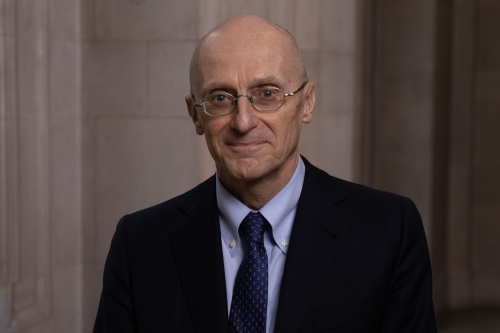
Pedro Duarte Neves is Adviser for the Board of Directors of Banco de Portugal and editor of the Review of Economic Studies of the Bank. He is a Visiting Professor at Católica Lisbon School of Business and Economics, Associate at the SRC (LSE) – where he is also Editor of the Forum on Financial Supervision – Affiliated Fellow with the Qatar Centre for Global Banking and Finance (KCL), and a member of the Advisory Board of the EBI. He was Vice-Governor of Banco de Portugal, Alternate Chairperson of the EBA, and chair of a number of committees in the scope of the FSB, EBA, and the Joint Committee of the ESAs. He has a vast experience at the main high-level supervisory and regulatory fora, like the EBA, SSM, ESRB, Joint Committee of the ESAs, and FSB. Pedro Duarte Neves published in scientific journals like The Journal of Econometrics, Economics Letters and Economic Modelling. His research interests include banking supervision and regulation, macro-prudential policy, and the real economy.