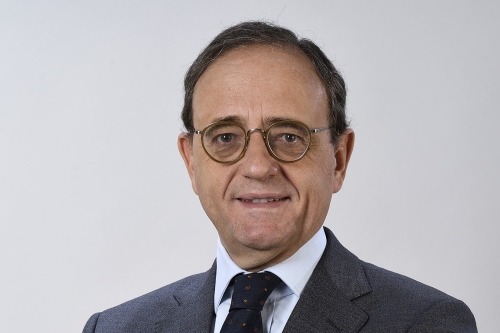
23rd July 2026
Andrea Enria: As Chair of the Financial Stability Board (FSB) and more recently in the G30 report you co-chaired with Agustin Carstens you focused extensively on the risks to financial stability arising from non-bank financial institutions (NBFIs). Could you tell us why we should be concerned about the build-up of risks in the NBFI sector? Wasn’t it a design feature of the post-crisis reforms to rebalance the structure of the financial sector and diversify the sources of financing for our economies, with a greater role to be played by predominantly equity financed NBFIs?
Klaas Knot: Thank you, Andrea and Pedro. Of course, before we delve into the risks and the financial stability consequences, I have to acknowledge that NBFI also provide significant added value. Their increasing role means that there is broader access to finance, more diversified funding is possible. This also means that NBFIs bring stronger competition, improved pricing, enhanced financial services, greater potential for innovation and other benefits. At the same time, there are also risks associated with NBFIs, which are different than in banks.
First, a lot of players in the NBFI space combine illiquid assets with runnable liabilities and this liquidity mismatch can give rise to calls for redemptions that will then generate stress and possible fire sales events, as we have already seen occurring a few times in financial markets – e.g, the dash for cash in 2020 and the UK Liability-Driven Investment (LDI) crisis in 2022.
Secondly, some of the players – hedge funds, for instance – also combine the liquidity mismatch with pretty high leverage. In all the instances of turbulence in the NBFI sector there were pockets of hidden leverage coming to the surface that we had not been aware of. We are used to thinking about banks as highly leveraged, but there is leverage outside the banking sector.
Finally, in financial markets collateral plays an enormous role, especially via haircuts and margining practices. Margin calls, in particular, generate spikes in liquidity demand. One of the most salient findings of the system-wide exploratory scenario (SWES) run by the Bank of England was that more than 90% of the spikes in liquidity demand under a stress scenario could be traced back to margin calls. So, the third concern I have is the lack of NBFIs’ liquidity preparedness for margin calls.
Andrea Enria: The G30 report proposes sweeping regulatory reforms which have met with strenuous resistance, especially in some jurisdictions. Assuming the current regulatory framework will not change in the near future, what could supervisors, central banks and resolution authorities do to prepare for a crisis originating in the NBFI sector?
Klaas Knot: The first best solution obviously is to bring the level of resilience in the NBFI sector to levels that are comparable to those in the banking system. Increasing requirements on NBFI would level the playing field. Efforts have been made in this direction and the FSB is currently reviewing the implementation of its standards and recommendations, which should enable to better understand why some of the standards and many of the recommendations issued in the NBFI area have not yet been fully implemented. But suppose, as you say, that we somehow fail to increase resilience in NBFIs through coordinated international efforts. Then the focus should shift to effectively monitoring and supervising the exposures that the banks have towards NBFIs. There is a rich literature now showing that the relationship between banks and NBFI is not simply complementary, with the two sectors specialising on different business. Nor is it simply substitution, with the two sectors competing on similar services. It is actually very symbiotic: banks continue to hold the liquidity advantage of having access to the central bank liquidity, therefore being much better able to deal with spikes in liquidity demand; but at the same time, as banks face much higher capital requirements on credit risk than NBFIs, credit risk, especially junior tranches, is migrating out of the banks; but then NBFIs, in order to sort of hedge their liquidity risk, often rely on a credit or liquidity line from a bank. Acharya and his fellow authors have highlighted that very well in a series of papers. Bank supervisors should regulate and supervise these interactions with the NBFI sector very attentively. In this second-best approach, you basically accept that there will be turmoil in the NBFI sector every now and then, but you try to shield the regulated part of the financial system, and particularly the banking sector, as much as possible. However, with this approach you would still then have turmoil in core funding markets, like government bond markets. That is something that would not be addressed via this indirect approach and could still generate situations in which central banks would feel the need to step in, given the crucial role that risk-free bond yields play in monetary transmission.
Andrea Enria: You have a past as insurance supervisor, Klaas. Do you think that there is also an insurance link here? We see increasing interconnection between insurance companies and NBFIs, for instance via private market players acquiring insurance companies and developing integrated strategies. Should we consider these connections as well?
Klaas Knot: Absolutely. It is not only that private equity companies acquire insurance companies, but then they place their private credit exposures on the balance sheet of the insurer. What I just said on supervisors should equally apply to insurance supervisors. They should be well aware that there is a complex web of interconnections now between private equity / private credit firms and insurance companies. And insurance supervisors should think carefully about the risks this might create for policyholders. This also requires increased vigilance.
Pedro Duarte Neves: Let us move to possible tensions for financial stability from the current policy mix, starting by monetary policy. We still remember that the hiking cycle in interest rates in 2022-23 was followed by some turmoil in the banking sector, mostly in the US. Today we are facing again considerable inflationary pressures, how do you see the possible tensions between monetary policy and financial stability objectives? What should micro-prudential and macro-prudential supervisors do to prepare, for instance, for a new hiking in interest rates?
Klaas Knot: A very good question, Pedro. But here I would definitely start on a positive note. Central banks tightened monetary policy very aggressively in 2022-23: 450 basis points the ECB, 500 basis points the Fed, and similar increases at most central banks globally within 12 months. And the only financial stability accidents were Credit Suisse ― which didn’t have anything to do with the macro financial backdrop, I think it was an idiosyncratic failure rooted in governance issues, misselling, conduct of business failures ― and a group of second tier banks in the US that were deliberately kept outside the international Basel III regulatory framework. All the banks that were under the Basel III framework actually weathered very well this massive shock to the financial system ― because let's face it, 500 basis point increase in interest rates in 12 is a massive shock. Had you told me before starting the hiking cycle that this would be the only repercussion, I would have immediately signed on to it.
I am starting on this positive note because I do think that the financial reform agenda that we rolled out after the global financial crisis, especially in terms of strengthening bank capital from both a micro and a macro prudential perspective, has really served us well and continues to serve us well today. I think the monetary policy reaction that is likely against the recent energy shock coming out of the Middle East, I think it will be much more modest than the 2022-23 shock. Markets are now pricing in at most 2 hikes for the ECB and comparable moves for the Fed, so I am actually not so worried about financial instability coming from a few interest rate hikes, I think the banks can weather these interest rate expectations quite well.
Let's also not forget that banks suffered when interest rates were low or negative, as their margin income was very much compressed. I think the banks can deal with interest rates that are fluctuating between 2% and 4%. And definitely also because the monetary policy changes are well telegraphed, are much milder and smoother than was the case in 2022-23.
Pedro Duarte Neves: I totally agree with you, and this is why I left the most difficult question on the policy mix to be the second, which is the mix between fiscal and financial stability. There has been a marked increase in public debt in many advanced economies, sizable and persistent deficits, fairly reduced fiscal space, shorting of the maturities, and ― relating to the first question by Andrea ― growing presence of NBFIs in the sovereign bond markets. So how do you see tensions between financial stability and public debt? And, once again, what could supervisors do to be more prepared for adverse developments on that front?
Klaas Knot: This is a real issue. If you look at the behaviour of government debt during the 25 years of economic and monetary union, you see a ratcheting up of public debt levels whenever there was a crisis. Obviously fiscal policy had to step in and had to provide support, I don't challenge that. What is problematic is that, in between crisis, governments have been very slow to recognize that the crisis was over, consolidate public finances and recreate the fiscal space. The recreation of fiscal space has not happened.
For instance, if we look at the fiscal positions coming out of the pandemic, debt to GDP ratios remain almost 90% on average for the euro area. The pandemic is already a few years behind, but government debt levels are high and rising. The adjustment needed in the primary structural fiscal deficits for many European countries, but also the UK and the US, corresponds to multiple percentage points of GDP.
Pedro Duarte Neves: Yes, there is the Bruegel report on that.
Klaas Knot: Indeed, the Bruegel report is also one of my sources of information on this: there are 13 countries that need more than three percentage points adjustment in the primary structural, there are 6 countries that need more than five percentage points adjustment. This will raise questions about financeability. On bond markets and bond market liquidity, the good thing is that on the European side, we have also a big savings surplus in the private sector. On a net basis the euro area still has a modest current account surplus, which means that the savings surplus in the private sector is still larger than the deficit in the public sector.
Also, a lot of public debt in Europe is internally financed by euro area investors, which means that rising interest payments don't leave the euro area, and that euro area sovereigns are a little bit less at the mercy of international capital markets than those countries that have a twin deficit, like, for instance, the UK, but also the US. The US, of course, has its exorbitant privilege of the dollar as a reserve currency, but the UK does not. But this is all not to say that the situation in the euro area is easily manageable. I think it is risky, even for countries like France and Italy that have a very high private savings surplus, but unfortunately also increasingly high government indebtedness. This is, I think, a very delicate situation.
Even though there is no formal risk weighting or concentration limits in the EU regulatory capital framework, I do think that banks should carefully manage their sovereign exposures. If I was a supervisor, I would perhaps push the banks to diversify their sovereign exposure, because the national bank-sovereign nexus is still well alive. With the euro, banks can now invest currency risk-free in 21 different sovereign debts. So, there is less economic reason, I think, for home bias, at least when we define home in terms of their own member state. Banks need to hold sovereign debt because of liquidity requirements, but they could diversify their sovereign holdings a bit more. And I think supervisors should be alert on that. And market regulators will have to accept that, every now and then, there will be turmoil in core funding markets. And governments need to be extremely careful in their decisions on the deficit front and in their communications, because fiscal policy is not on a sustainable path in all EU member states.
Andrea Enria: Let me move to the current debate on financial regulation and supervision. The buzzwords are “simplification”, “competitiveness”, “modernisation”. How do you read the pressures to review the reform package adopted after the Great Financial Crisis? Is it a physiological correction of excessive complexity and conservatism introduced in rules and supervisory practices in reaction to a major crisis? Or is the pendulum swinging back too fast and too far in an environment of renewed competition for business amongst jurisdictions?
Klaas Knot: Well, I hope it is the former. And I must say that if I were still in the regulatory community, I would also be open for such a review. Because, let's face it, if you run a business and you have one business unit that for 15 years had all the wind in the sails, got all the extra resources and the extra money that it asked for in every individual budget round, it is no more than logical to look back and conclude that a review is welcome. Is it our assessment of the risks on our priority list still the same today, as the set of priorities that have been accumulated in the last 15 years? As we, central bankers and supervisors, probably have an above average degree of risk aversion, we are probably much better in identifying new risks than in acknowledging that a risk that we identified 5 or 10 years ago is perhaps not so relevant anymore today. So, there is a natural tendency, a sort of bureaucratic mechanism that is at work in all our agencies, to grow, and I think that every now and then stepping back and reassessing is nothing more than healthy. If I were a supervisor, I would also take a step forward and actively take ownership of that process, acknowledging that this can also lead to cutbacks in supervisory resources in specific areas.
Instead, I would be cautious if we were really entering into a debate leading to actively lowering requirements. I think you and I, Andrea, probably see eye to eye on this. I don't believe that US banks have been so much more successful than European banks because of lower capital requirements. The evidence actually shows the opposite. The Basel III proposals that are now out for consultation in the US, actually take away the gold plating and bring the US standard closer to the bare Basel standard. In Europe, the bare Basel standard is also the maximum that we have done - and in some areas, we are even a little bit below. So, I don't believe it is an unlevel playing field that is making US banks more successful than European banks.
I think that has much more to do with, unfortunately, the fragmentation that we still have within our banking union, so that European banks are less able to benefit from scale. And I do think that finance has become a scale business, there is now a lot of commoditization in banking, so having scale works in your favour. We still have a fragmented banking market, we don't have a real banking union if you look at banking exposures. We have a banking union in terms of the institutions that we created, the single supervisory mechanism (SSM), the single resolution board (SRB); we don't have a deposit insurance scheme yet, that is still lacking. But if you look at the behaviour of the banks, since I became governor in 2011, on net they actually withdrew in terms of cross-border credit provision. So, to me, it is more important to deal with home-host issues, trapped pools of liquidity, insolvency procedures. They're very difficult to deal with, as they are politically quite sensitive. But to me, that is the more profound reason explaining why US banks have performed better, despite the fact that they faced higher capital requirements. That's why I don't believe we should actively be rowing back from post-crisis regulatory reforms.
In an earlier answer I pointed out that a major interest rate shock did not translate into systemic risk in the banking sector. Let's cherish that. I was also around in 2008 and 2009, and you were around as well, Andrea. We effectively abolished capitalism in the financial system in those years. Banks were either nationalised or sheltered by public asset protection schemes. Nobody wants to go back to that world. But banks do suffer from some excessive bureaucratization. In Pillar 2 processes, for instance, we could dial back a little the supervisory intensity.
Pedro Duarte Neves: As you mentioned, the financial system is much more resilient, but financial integration and risk sharing within the euro area didn't increase much since the crisis. This applies to both channels for risk sharing, the credit channel, which I associate with banking, and the capital channel, which I associate more with capital markets. And that leads us to the Banking Union, which is incomplete, and the capital markets union (CMU), now relabelled Savings and Investments Union (SIU), that, so far, did not deliver the expected progress in market integration. What would you like to happen in either the banking union or the SIU to really enhance financial integration and risk sharing within the euro area?
Klaas Knot: I think we all agree that private risk sharing would make us all better off. Private risk sharing is much more prominent in the US, even more than public risk sharing in terms of smoothing out economic shocks across the States. And we should aim to having such a situation also in Europe. On the banking union, clearly, we need a European deposit insurance scheme, so that every euro in a bank account ― at least for that part that is covered by deposit insurance ― has exactly the same value, wherever it is held in the euro area. We should never again fall back into a situation, like in 2011-2012, where a euro in a Greek bank was clearly perceived to be less valuable than a euro in a German bank.
But besides the deposit insurance aspect, we need to better understand why the banks are not more active across borders and remain confined to one or two Member States at most. And the few that are present in multiple Member States, they typically also run the different businesses still quite separately. In my view, this has to do a lot with home-host barriers ― that were maybe understandable in the immediate aftermath of the crisis experience when the safety net and bank rescues operations were exclusively national ― but are much less justified now that we have area-wide supervision and resolution mechanisms including a common resolution fund. And if we could also add a European deposit insurance scheme, then most obstacles to cross-border banking should gradually disappear. In Europe financial intermediation is dominated by the banking sector. So, if you want more risk sharing through the financial system, the banking union is clearly at this moment the most important channel.
That is not to say that we would not benefit greatly if we had more capital markets union as well, because that would also bring more diversification into the financial system. I think it is a positive development that the E6 are now trying to generate more momentum to the CMU project, but it needs a multi-pronged approach. If the banking union has taught us one thing, it is not just acting on the public side, harmonising rules and creating a single supervisor, for instance ESMA, that of itself generates a capital market union. The SSM has not brought about a banking union.
We need to think about the incentives of the private sector players in our capital markets. The countries that have a meaningful capital market in Europe are those that have funded pension systems. If you want to have a viable capital market, you clearly need to channel old age retirement savings into the capital market, into risk bearing assets, into the types of assets we need to finance the transitions that Europe needs to undergo. An excessive portion of old age retirement saving is currently still being placed on bank accounts, where it is also financing the economy, but via debt claims, not through equity investments. We need to get more of the European savings into equity markets. Well, the Swedish investment product is a good example for many. We need tax incentives to convince people to participate more in the capital market. But we also need to create more of an equity culture. It is also about default options. Auto-enrolment of pension plans is, for me, a very promising avenue. If when you join a company, you automatically join a pension fund, unless you want to pull out ― I mean, we should always give people the freedom. Combined with targeted tax incentives to save through a pension product, actually a larger share of these savings would end up in the equity market and provide risk bearing capital and would enable pension scheme participants to pick up the equity premium embodied in investments that have a 20, 30, 40 year investment horizon.
Andrea Enria: Coming back to international standards, I see an emerging attitude to check how other jurisdictions are implementing them and match them in areas in which they apply less demanding rules, to support the competitiveness of your financial institutions. This approach may well lead to deviations from the international standards. For instance, this seems to be the case in the recent debate on the fundamental review of the trading book. How do you see the outlook for supervisory collaboration and international standards setting in an environment in which geopolitical dynamics and competitiveness concerns play an increasing role?
Klaas Knot: There's a Dutch saying that the grass is always greener in the neighbour's yard. In Europe, the banks look at the US and say that rules are lighter there, and US banks might maybe look at Europe and say it is less demanding here. If we don't want to be played against each other as jurisdictions, it is crucial that we maintain international cooperation. We have to maintain the annual exercise with which the Governors and Heads of Supervision (GHoS) assess how rules are calibrated in the various jurisdictions and compare notes. Because if we rely on the industry comparing notes, there will be a “pick and choose” approach driving down the stringency of the whole framework.
A second observation is that the need for a level playing field may not be equally strong in every line of business. In the rules on the trading book we should be fully aligned because today you can book a trade in any place in the world. So, there I think you need to have full harmonization. But if, for instance, a mortgage is an entirely different product in different jurisdictions so that there is no cross-border competition, then there could be more leeway for variable treatment, as long as the overall calibration stays in a broadly similar ballpark, without providing a competitive edge by overall lower capital requirements in the different places in the world.
Pedro Duarte Neves: Moving now to artificial intelligence (AI), which has recently become a major area of focus in the discussion on risks for financial stability at the IMF spring meetings. I will also quote Sam Woods, the outgoing Chief Executive of the PRA, who said in a recent interview that vulnerabilities in lenders’ IT systems are at the top of his list of supervisory concerns. How do you see these risks? And once again, what should supervisors approach them?
Klaas Knot: AI is in full development and there is a wide range of views on its potential effects, in general and in the financial system. The focus has been on the capability of frontier AI models to identify vulnerabilities in the IT systems that banks and other financial institutions are using. Admittedly, we know that a lot of banks still use legacy systems that are quite old and probably vulnerable to cyber-attacks. All I can say is that supervisors must be extremely alert. They must invest in their own knowledge on AI. I would always continue to emphasize the human factor. You can outsource functions, you can automatise processes, you can rely on AI for certain banking tasks; but at the end of the day, AI cannot take over responsibility for decisions. Responsibility for decisions continues to be for humans, who may use AI as a tool, but without being released from their statutory responsibilities.
As a supervisor, I would continue to push this point with the senior management of the banks: they should prove that they are in control over the use of AI within their financial institution.
Andrea Enria: Under your leadership De Nederlandsche Bank has been at the forefront of the effort to capture climate and environmental risks in the framework for supervision and financial stability. Following the exit of the US from the Paris Agreements and the Network on the Greening of the Financial System (NGFS) the issue moved out of the front stage of international standard setting and international banks may well be confronted with very different regulatory and supervisory environments across jurisdictions. How important is in your view that supervisors remain focused on these risks?
Klaas Knot: I would start by saying that climate risks don't go away. If anything, they intensify, if you look at the extreme weather events and the losses associated with the insurance gaps that you're seeing everywhere in the world. It is an autonomous risk that will be growing for many years, because we haven't really been able to reduce fossil fuel emissions yet. And even if we were successful, it would take quite a while. So, we will have a long shadow in front of us, where climate risk will continue to manifest itself and will therefore also create risks that needs to be managed by financial firms and that supervisors need to be alert to.
Now we are probably moving away from the early phase in which this risk was new, and we had to give it additional emphasis to make sure that people would get alert to it. We are moving to a more mature phase, where it is broadly accepted that it is an important risk alongside other more traditional risks. Obviously, banks should always take the materiality of the risks into account. It should also not be a special risk anymore, in my view.
The political dialogue around climate risk has changed somewhat. Maybe this is a physiological adjustment: the dialogue was a bit too intense and maybe the impression was created that climate risks were an overarching element, and other risks were subordinated to climate risk. And that was not a true description of the state of the world. I hope that this debate becomes a little bit less emotional, a little bit less ideological, and that technocratic supervisors will focus on the risks, including climate risk, which is there, whether you like it or not, whatever is your political preference. There is no denying the losses are there, so there is a simple duty on supervisors to supervise how these risks are being managed within financial institutions.
Pedro Duarte Neves: A very last question. I remember that, at the Peterson Institute, you made the speech “Agnostic or preaching the gospel”. If anything, the topic of the international role of the dollar ― and also of the euro ― became even more important since then, as many reports on global imbalances came out, like the G7 report, the IMF policy paper, the CPER report, amongst others. There is also the great book by Kenneth Rogoff on the dollar. In the meantime, if anything, it became clear that the US has now an all-time negative international investment position, even if we know well that there are some relevant valuation issues there. There are also the all-time highs on public debt. And it's not clear if the exorbitant privilege that you mentioned before is still as strong as it used to be. So, having all of this in mind, how do you see the role that the euro could have as international currency, do you see any current threats for the dollar?
Klaas Knot: It is clear that the current set of US policies, under normal conditions, should not be conducive for the international role of the dollar. Nonetheless, we don't see much movement out of the US dollar. We see some composition effect that international investors are more interested in the US stock market than in the US bond market. But in total ― and the ECB has just published its update on the international role of the euro ― you see hardly any movement, the euro has not yet benefited from any sort of supposed decline in the international role of the dollar.
Why is that the case? In my view, because the alternatives are not really credible yet. In terms of economic weight, China would, of course, come to the fore as the first potential rival here. But the renminbi is not convertible in many places, there are questions around the rule of law in China and about the independence of the central bank. These are crucial preconditions for your currency to become an international reserve currency, and they are not being met in China. Japan is also a big economy, but it is in a far advanced, stage of ageing. So, also not the kind of saving-investment balance that one expects could make the yen develop in a competitor.
Then Europe: why is the euro not developing into a real rival? In my view, the answer has everything to do with our internal fragmentation. If you look at the preconditions, how would the euro score on the criteria for becoming an international reserve currency? The rule of law is still upheld in Europe, and Europe is, I think, increasingly unique in this matter. This is a very strong point. The ECB is a very independent central bank. Nobody questions its commitment to monetary and financial stability as enshrined in the Maastricht Treaty. That is also a clear positive. But then there is the principle that you cannot signal external strengths if you're internally too divided, if you don't have an integrated banking union, if you don't have an integrated capital markets union, if you do not even have a true internal market. The Draghi and the Letta reports are pretty clear on the impediments that still apply within Europe when it comes to the cross-border provision of goods, services, and labour. Absent a deep and liquid capital market, a pan-European banking market ― and, also, a pan-European goods and services market ― then I don't think that the euro stands much of a chance to really become a rival to the dollar.
We could probably push up the usage of the euro somewhat by having a more active policy in terms of invoicing: in the international agreements that we strike we could say that invoicing in euro is a precondition for certain trades. We could more actively think about international swap lines, repo lines, and make them more easily available for countries that want to join the EU. But in the end these are all factors on the margin. As long as we cannot overcome our internal divisions, our internal incoherences, I don't think that the euro has the potential to really become a rival to the dollar. My hunch is that we will have to continue to live with the dominance of the US dollar for quite some time.
As a last point, I would also stress the capacity of the US economy to generate financial returns. It is not for nothing that investors want to be in the US equity market. The capacity to generate returns cannot be ignored if you are, for instance, a member of the board of a pension fund. Your government can emphasise strategic autonomy and maybe create incentives to investing a bit more in your country or in Europe. But at the end of the day, your pensioners, the scheme participants, want you to get the highest returns because ultimately this is what funds their pension. As long as the US economy is strong and is generating excess returns, the dollar will remain in a position of prominence. And this despite the fact that the US administration is undertaking some policies that would normally be seen as undermining the international role of the dollar.
Andrea Enria is a Senior Advisor at the Prudential Regulation Authority and a Member of the Prudential Regulation Committee of the Bank of England, with a term of appointment from 20 March 2025 to 19 March 2028.
He was a visiting scholar at the London School of Economics’ Financial Markets Group from May 2024 to April 2025. He previously had key roles in European banking supervision: he served as Chair of the Supervisory Board of the European Central Bank (2019-2023), first Chairperson of the European Banking Authority (2011-2018) and Secretary General of the Committee of European Banking Supervisors (2004-2008). He began his career in banking regulation and supervision at Banca d’Italia, where he covered different roles and left as Head of the Regulation and Macroprudential Analysis Department.
He has a BA in Economics from Bocconi University and a MA in Economics from the University of Cambridge.

Klaas Knot was President of De Nederlandsche Bank from 1 July 2011 to 1 July 2025, a period during which he was also a member of the European Central Bank’s Governing Council and General Council, the European Systemic Risk Board, the International Monetary Fund's Board of Governors, and the Board of Directors of the Bank for International Settlements. He served as Chair of the G20’s Financial Stability Board from 2 December 2021 to 1 July 2025.
Knot currently runs his own strategic consultancy firm, KK Economic Advisory, where he advises European and Dutch public authorities on wide-ranging issues such as crisis management, central bank independence, and financing public infrastructure. He is also a frequent speaker at various (inter)national conferences and symposia.
Knot recently joined the Peterson Institute for International Economics as a Distinguished Visiting Fellow as well as the CFA Institute Systemic Risk Council. Since 2019 he has been an active member of the Group of Thirty, a global advisory body comprised of economic and financial leaders. He has been (honorary) professor of Money and Banking at the University of Groningen since 2005, and an honorary professor of Monetary Stability at the University of Amsterdam since 2015.
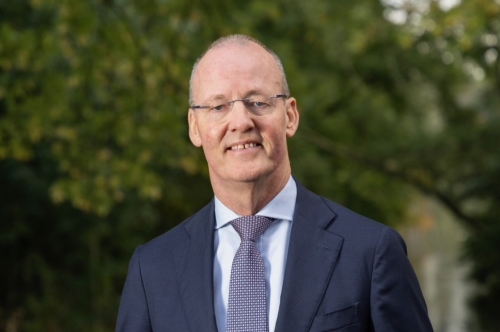
Pedro Duarte Neves is Adviser for the Board of Directors of Banco de Portugal and editor of the Review of Economic Studies of the Bank. He is a Visiting Professor at Católica Lisbon School of Business and Economics, Associate at the Systemic Risk Centre (London School of Economics) – where he is Editor of the Forum on Financial Supervision – Affiliated Fellow with the Qatar Centre for Global Banking and Finance (King’s College London), and a member of the Advisory Board of the European Banking Institute.
He was Vice-Governor of Banco de Portugal and Alternate Chairperson of the EBA. Pedro has a vast experience at the main high-level supervisory and regulatory fora (EBA, SSM, ESRB, Joint Committee of the ESAs, and FSB) where he chaired many committees.
Pedro published in scientific journals like The Journal of Econometrics, Economics Letters, and Economic Modelling. Pedro has a European Doctoral Program in Quantitative Economics from Université Catholique de Louvain, having conducted his research at The Institute for Fiscal Studies (London), University College London (London), and Center for Operations Research and Econometrics (Louvain).